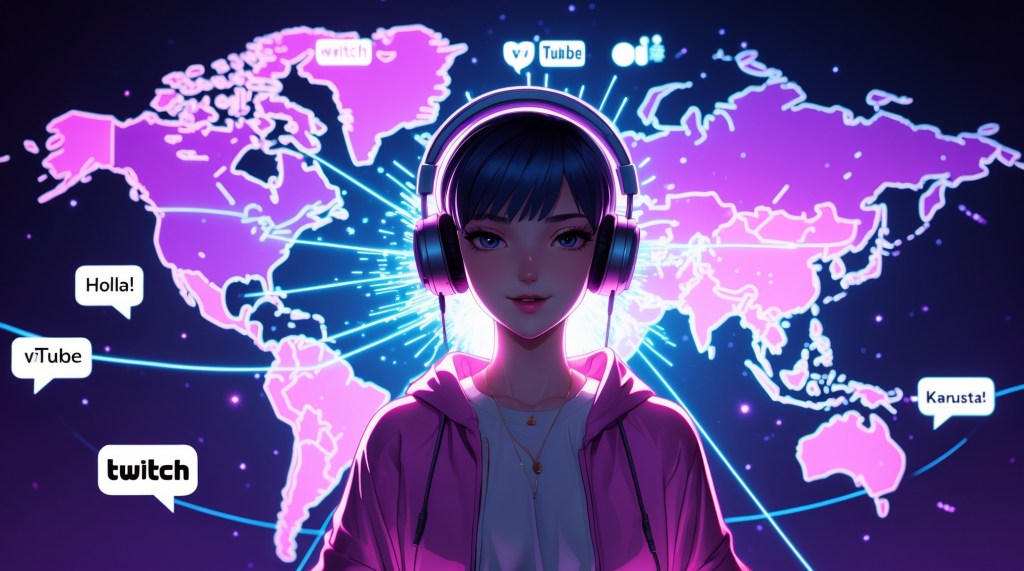
Ever felt like your content is too good to stay boxed into one language? If you’re a VTuber who’s been pouring your soul into every VTuber stream, perfecting your VTuber avatar, tweaking your VTuber model, and crafting a unique online persona, but only streaming in one language, you might be leaving thousands (if not millions) of potential fans untapped.
The good news? You don’t need to change your content style. You just need to speak their language. Literally. Let’s talk about the power of running a multilingual VTuber stream, and why it might just be the boldest growth move you can make in your VTubing journey.
The Real Reason You’re Not Growing? It Might Be Language
You could have the most aesthetic VTuber avatar on the planet, a charming voice, sharp humor, and a killer game sense—but if your audience can’t understand you, they’ll scroll past. Not because you’re bad. But because there’s a language wall you haven’t climbed yet.
Many VTubers think growth is only about aesthetics, overlays, or viral clips. While all of that helps, one low-effort, high-impact move most creators overlook is this: Start speaking the language of the fans you don’t currently reach. That’s what makes a multilingual VTuber stream so powerful. It doesn’t just expand your audience, it expands your connection.
Language: The Secret Weapon of Indie VTubers
Big agencies often have the budget to translate content, hire interpreters, or run region-specific channels. But as an indie VTuber, you have something just as powerful: flexibility. You can adapt faster. Experiment sooner. Learn with your audience.
Look at rising stars on Twitch or YouTube who suddenly spike in growth after adding subtitles or switching languages mid-stream. These aren’t one-time flukes. They’re strategic identity shifts that welcome entirely new communities into the fold. You don’t need to master a second language overnight. You just need to open the door.
The Rise of Multilingual VTuber Streams: Why Now?
In 2025, streaming is no longer local. It’s hyper-global.
VTubing is booming in regions like:
- Southeast Asia (Tagalog, Bahasa, Thai)
- Latin America (Spanish, Portuguese)
- Korea & Japan (Japanese, Korean, and growing English audiences)
- India (Hindi-English VTubers are just beginning to emerge)
And platforms like VTube Studio, Twitch, and YouTube Live are amplifying creators who run diverse VTuber streams, even algorithmically.
But there’s more: The tools have finally caught up. With real-time captioning, improved AI translation, bilingual chatbot plugins, and global discoverability built into algorithms, going multilingual is no longer a technical hurdle; it’s an open door. More VTubers are realizing they can reach new audiences without hiring a team or reworking their entire stream setup. The growth potential isn’t just theoretical; it’s already happening. In other words, the system is already encouraging it. You just need to lean in.
I Only Speak One Language… Can I Still Do This?
Short answer: Absolutely. You don’t need to be fluent to run a bilingual VTuber stream. You just need to be intentional. Here are smart, beginner-friendly ways creators are embracing multilingual VTubing without needing years of language study:
1. Subtitled Clips and Highlights
Even if your live VTuber streams are monolingual, short subtitled content spreads like wildfire.
Use tools like:
- CapCut or Descript for fast translations
- YouTube Studio for multilingual captions
- Premiere Pro with auto-speech detection
Subtitled clips, not just full videos, perform better in global sharing, especially on TikTok and Shorts.
2. Twitch or OBS Translation Bots
You can integrate real-time auto-translate bots into chat, letting you or your mods bridge communication gaps. Some even allow viewer submissions to correct translations live.
This builds a unique, collaborative atmosphere—viewers love helping VTubers navigate their language.
3. Pre-recorded Language Sprinkles
Record mini-intros or emotes in other languages and trigger them through your Stream Deck or hotkeys:
- “Konnichiwa, welcome to my VTube!”
- “¡Hola, amigo!”
- “Namaste, and let’s game!”
Even five seconds of language flavor makes viewers from that region feel seen.
4. Learn With Your Viewers
Why not make “language learning” part of your content?
There are VTubers running entire language practice streams—where they play games and let their chat teach them new phrases. It’s hilarious, charming, and deeply engaging.
You’re not just a creator, you’re a student with your fans.
Building a VTuber Persona That Speaks More Than One Language
Let’s talk character design. Because your VTuber avatar can evolve with your multilingual identity.
Here’s how multilingualism can inspire deeper branding:
- A traveler-themed avatar who visits “realms” of different languages
- A cyberpunk robot that downloads languages as upgrades
- A magical being who speaks a different tongue under moonlight
Even simple lore adjustments, like your VTuber persona having studied abroad, or being a polyglot AI, can help you organically introduce new languages into your VTuber streams.
Multilingualism doesn’t have to feel like a plugin. It can feel like part of your story.
Structuring Your Multilingual VTuber Stream for Growth: What Works?
Running a stream in multiple languages doesn’t mean bouncing between languages every 10 seconds. Here are strategies that actually work:
Time Blocked Segments
Split your VTuber stream into clear language zones:
- First 30 mins: English intro & gameplay
- Next 20 mins: Chatting in Japanese
- Final hour: Mixed-language chaos
Make it predictable and mark them with on-screen cues so viewers know when their moment is coming.
Language-Themed Days
Assign languages to specific stream days:
- Mundo Lunes (Spanish Mondays)
- Japari Fridays (Japanese Focus)
- Wildcard Sundays (Multilingual & Meme Chaos)
Your regulars will start looking forward to specific days.
Multilingual Collabs
One of the most fun formats? Cross-language collabs.
Pair up with a VTuber who speaks a different language and run:
- Q&A swaps
- Drawing games
- Language challenge streams
The cultural crossover is pure gold—and it gets both fanbases talking.
Tech-Sync for VTuber Streaming: Matching Voice, Avatar, and Culture
Now that your voice is adapting, can your VTuber model keep up?
If you’re using Live2D or 3D models, be sure your mouth shapes and phonemes are customized to match more than one language. For example:
- Japanese requires different mouth rounding and consonants than English
- Spanish is more open-jawed and vowel-heavy
- Korean has softer transitions and tongue-tip articulations
Apps like:
- VSeeFace
- Luppet
- VTube Studio
Let you fine-tune blend shapes or add language-specific facial expressions.
Bonus tip: Create custom emotes or toggles tied to each language. That way, when you switch from English to Spanish, your avatar could switch from heart eyes to a celebratory emoji.
The Magic Moment: When Language Turns Viewers into Community
It often starts with something small. A “hello” in another language. A mispronounced thank you. A hesitant attempt to read a foreign username aloud. But in that moment, something shifts. Suddenly, a silent viewer from Brazil drops a message: “Você é incrível.” A Filipino fan who’s never spoken in chat replies with “Mahal kita!” A Japanese viewer sends a superchat just to say “ありがとう for trying.” These moments aren’t the result of strategy or marketing—they’re sparks of real connection.
Multilingual VTubing isn’t about being fluent or perfect. It’s about showing that you care enough to try. That your stream isn’t just a one-way performance, but a space where people from different cultures can feel seen, heard, and valued. When your audience hears even a single word of their language in your voice, they don’t just tune in, they lean in. That’s how casual viewers become returning fans. How fans become a community. And how your stream transforms from content into connection.
What to Avoid: The Respectful Route to Global VTubing
While going multilingual is a growth goldmine, it’s also a cultural responsibility.
Here are a few things to avoid:
- Don’t overplay accents for laughs
- Don’t parody languages or cultures
- Don’t use Google Translate without context
- Don’t use language as a gimmick
Instead:
- Ask your community for help
- Be humble when you make mistakes
- Always aim for connection over perfection
Multilingualism in VTubing isn’t a performance—it’s an invitation. Handle it with heart.
The Payoff: Why This Move Is Worth It
Let’s recap what you gain when you add even one new language to your VTuber stream:
✅ Expanded global reach
✅ More loyal fans from different regions
✅ Shareable content that crosses language barriers
✅ Unique identity in a saturated market
✅ Collab opportunities with other VTubers worldwide
At the end of the day, VTubing is storytelling, and language is how that story is told.
Final Thoughts
The future of VTubing isn’t just built on better tech, it’s built on deeper human connection. And nothing forges that connection more powerfully than language. Whether you’re adding subtitles, picking up new phrases, or fully embracing a multilingual VTuber persona, every word you speak in someone else’s language is an invitation: Come closer. This stream is for you, too. Your voice has reached. Your message has power. And somewhere out there, someone is waiting to hear your story, in their tongue. So let your stream be more than entertainment. Let it be a bridge between cultures, a spark of understanding, a shared laugh across borders. The world isn’t just watching. The world is listening. Now’s your time to speak.


 VtuberLab
Leave a comment