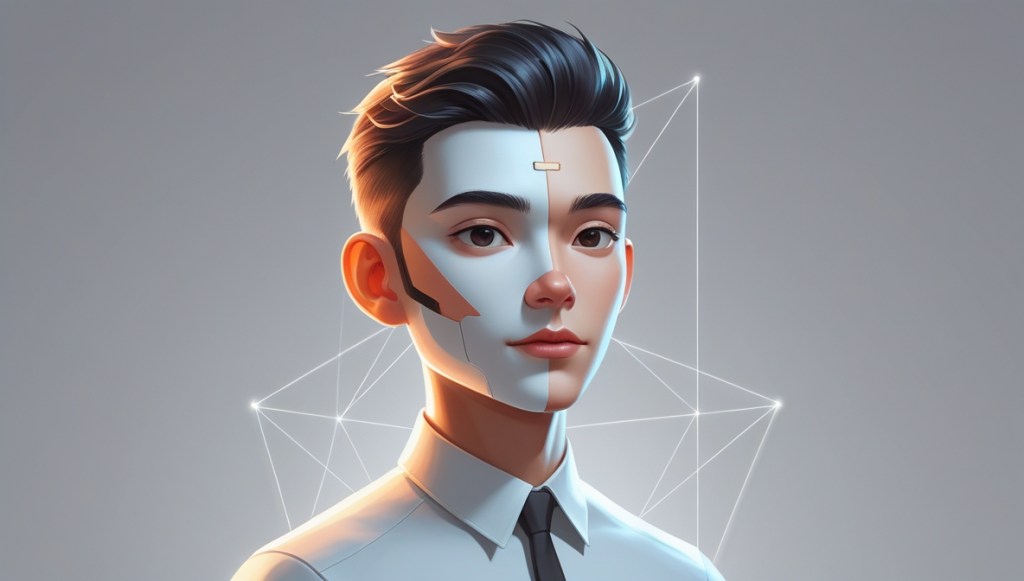
In the accelerating wave of VTubing in 2025, one of the most defining creative choices you’ll make is this: 2D VTuber model or 3D VTuber model? This isn’t just about style. It’s about how you’ll tell your story, engage your audience, and scale your virtual identity. The format you choose shapes your creative range, technical ecosystem, and long-term flexibility as a brand.
If you’re here, you already think beyond surface-level aesthetics. You care about sustainability, not just in content output, but in creator growth. At VTuberLab, we blend a decade of content strategy and creative insight to decode both the art and the architecture of VTubing, so your model choice doesn’t limit your future; it multiplies it.
The Stakes in 2025: Why Avatar Format Still Matters?
The VTuber space is no longer a fringe experiment. Audiences expect high polish, dynamic visuals, collaborations, and immersive events. Monetization (sponsorships, tipping, merchandise, virtual concerts) demands scale. The good news: tracking, rendering, and real-time systems are stronger today than ever, narrowing the barrier for experimentation.
However, that also means your avatar choice has more downstream consequences than ever. The “wrong” choice can become a pain point for months or years.
What Is a 2D VTuber Model?
A 2D VTuber avatar is built from layered artwork (often PSD or vector files), rigged with software (e.g., Live2D Cubism) so that facial movement, head tilt, blinking, and limited motion can animate your avatar in real time.
Key Tools & Examples:
- Live2D Cubism is an industry standard for crafting expressive 2D vtuber avatars. live2d.com
- VTube Studio is a commonly used runtime/face-tracking frontend for Live2D avatars. virtualyoutuber.fandom.com+1
- Other creative tools like Inochi Creator or VeadoTube Mini sometimes get mentioned in VTuber communities as alternatives or lightweight models. Reddit
Strengths of a 2D VTuber model:
- Cost efficiency & lower technical overhead: You don’t need a powerful GPU or advanced mocap gear. Many creators start with just a webcam + rigged 2D avatar.
- High stylization freedom: Because it’s hand-drawn, you can push exaggeration, custom expressions, stylized proportions, or chibi styles more easily.
- Faster iteration & updates: Tweaks to expressions, outfit swaps, and seasonal variants are often easier in a 2D pipeline.
- Lower risk of performance issues: Fewer dependencies, simpler pipelines, fewer bugs.
Weaknesses/limitations:
- No full 360° movement: A 2D vtuber avatar is limited in depth and cannot rotate fully like a 3D model.
- “Flatness” perception: If your rigging is basic, viewers may see parts “cut out” or transitions may feel stiff.
- Expression and pose constraints: Full body turns, dynamic gestures, or extreme poses are harder to rig convincingly.
In short: a 2D vtuber avatar is ideal when your content is focused on chat, commentary, voice, and building intimacy rather than movement or spectacle.
What Is a 3D VTuber Model?
A 3D vtuber avatar is a full 3D mesh, textured, rigged with bones, and often deployed using real-time engines like Unity or Unreal. Motion capture (face, body, hand) or VR gear (controllers, trackers) bring it to life.
Key Tools & Examples:
- VRoid Studio is a popular free tool to build and customize 3D avatars. virtualyoutuber.fandom.com+1
- Blender (open source) is often used to refine or rig 3D avatars, produce animations, etc.
- TheVtubers (thevtubers.com) is a service that commissions or sells custom 3D avatars, handling sculpting, rigging, and real-time mirroring for creators. The Vtubers
- VSeeFace is a free face-tracking tool often used with 3D models (especially VRM) for live streaming. Dubbing AI Voice Changer
Strengths of a 3D vtuber avatar:
- Full freedom of movement & angles: You can rotate, walk, gesture, move in depth, change camera angles, and perform dynamic scenes.
- Immersive presence: Lighting, shading, spatial depth make the avatar feel more “real” to viewers.
- Scalable across experiences: Use the same 3D character for streams, concert stages, AR/VR, events, virtual stages.
- Long-term leverage: As VR, metaverse, spatial streaming grow, 3D gives you a future-friendly asset.
Weaknesses / challenges:
- Higher initial cost & complexity: Sculpting, texturing, rigging, shader work, and setting up the pipeline is nontrivial.
- Stronger hardware demands: Real-time rendering + tracking can strain your PC/GPU.
- Steeper learning curve: You must manage engine settings, shader compatibility, tracking latency, fallback poses.
- Maintenance overhead: Updates, bug fixes, shader compatibility across streaming tools may require continuous work.
If you want to host virtual concerts, walk in 3D stages, or partner in immersive experiences, a 3d vtuber avatar gives you leverage. But you must be ready to shoulder the complexity.
Avatar Choice = Strategic Decision (Not Just Aesthetic)
Let’s reframe this: “Which is better?” is the wrong question. The right question is: Which format best supports your style, goals, resources, and long-term growth?
Content Format & Focus
- For chat, IRL, voice-first content: a well-rigged 2D vtuber avatar often gives you maximum freedom with minimal friction.
- For dances, concerts, full-body performances or virtual events: 3D vtuber avatar is better suited.
- Many creators adopt a hybrid approach: use 2D for everyday streams, and 3D for special events or collaborations.
Budget & Team Capacity
- As a solo creator or small team, 2D is lower risk, lower cost.
- If you have access to 3D artists, motion capture gear, shader coders, or sponsors, a 3D pipeline becomes more feasible.
- Always factor in ongoing costs (maintenance, updates, rig fixes) when evaluating.
Brand Positioning & Audience Perception
- A 2D avatar can be deeply unique and memorable. If you design something expressive, it can build strong emotional connection.
- A 3D avatar may project professionalism, ambition, and presence—especially in communities that value spatial/immersive experiences.
- Your avatar choice becomes a part of your brand identity. If you brand yourself as futuristic or immersive, 3D aligns well. If you brand as cozy, expressive, stylized, 2D might resonate better.
Technical Reliability & Pipeline Simplicity
- 2D pipelines are simpler, fewer points of failure, lower latency risk.
- 3D pipelines involve more moving parts: rendering engines, shader compatibility, tracking stability.
- If you prize stability over spectacle, choose the path with fewer potential failure points.
Growth & Future Vision
- If you foresee branching into AR, virtual concerts, or immersive events: 3D is more forward-looking.
- If your growth plan centers on community, incremental content, voice/character-driven expansion: 2D might let you put more focus on content and marketing early on.
Real-World Reference & Best Practices
- Hololive, VShojo, NIJISANJI often use 3D for songs, animation, events—but maintain 2D rigs for regular streaming.
- Many indie VTubers launch with a 2D vtuber avatar and later upgrade or even dual-deploy a 3d vtuber avatar.
- TheVtubers (thevtubers.com) is a great example of a service that helps creators commission polished 3D avatars—especially useful if your skillset isn’t modeling or rigging. The Vtubers
- Use tools like VSeeFace to bridge model and streaming pipelines. Dubbing AI Voice Changer
- Use Live2D Cubism as your 2D modeling/rigging backbone. live2d.com
The lesson: avatar is not a one-time decision. It’s a strategic asset you can evolve.
Tool Ecosystem: Choose Wisely
Here are a few recommended tools and platforms you should know (with real names, so you can dig deeper):
- Live2D Cubism – top choice for 2D vtuber model creation and rigging. live2d.com+1
- VTube Studio – runtime / tracking client often paired with Live2D avatars. virtualyoutuber.fandom.com+1
- Inochi Creator / VeadoTube Mini – alternate lightweight or experimental 2D model tools mentioned in community circles. Reddit
- VRoid Studio – free 3D avatar creation tool with customization. virtualyoutuber.fandom.com+1
- Blender – open source modeling/animation tool to refine/rig 3D avatars.
- VSeeFace – open-source face tracking for 3D models (often VRM) used in real-time streaming. Dubbing AI Voice Changer+2virtualyoutuber.fandom.com+2
- TheVtubers – service to commission or purchase custom 3D vtuber avatars and real-time pipelines. The Vtubers
- VTubers.TV – a platform built for VTubers (streaming + social) as an alternative to generic platforms. VTubers.TV
When you pepper the names of concrete tools and platforms, you deepen your credibility—and the reader feels they’ve got actionable leads.
Final Reflection
In 2025, choosing between a 2D or 3D VTuber avatar isn’t about what’s “better”; it’s about what aligns with you. A 2D VTuber model offers simplicity, emotional expressiveness, and accessibility, making it perfect for creators who value connection and storytelling. Meanwhile, a 3D VTuber avatar delivers dynamic realism, stage presence, and long-term scalability for those eyeing immersive experiences or virtual events. Both paths can build a thriving VTuber career when paired with authenticity and consistency. Start where your creativity feels most natural. Your avatar should evolve with your journey, not define its limits.


 VtuberLab
Leave a comment