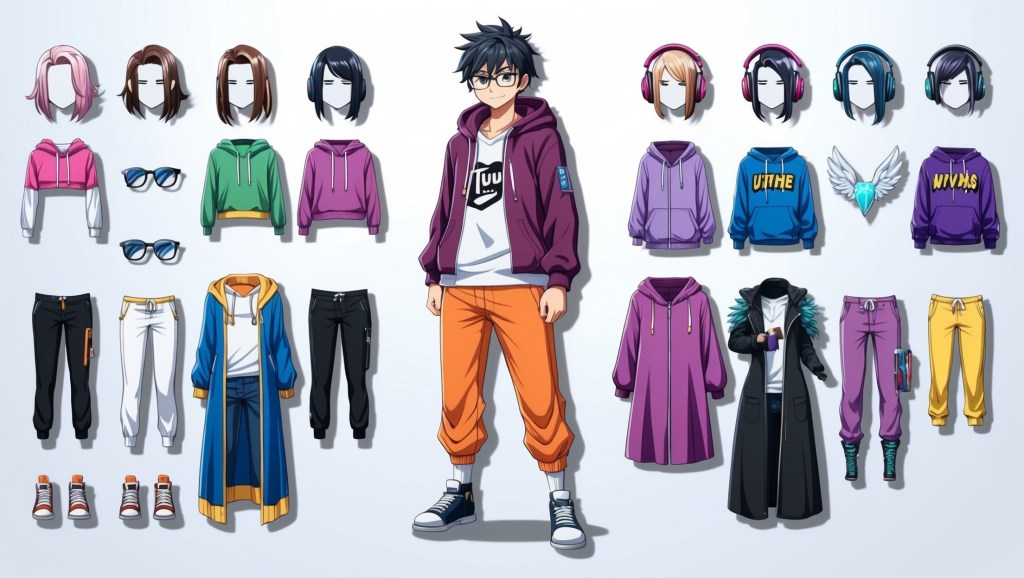
If you’ve spent any time in the VTubing space, you already know how important a VTuber avatar is to your identity. It’s more than just a character; it’s your stage presence, your brand, and the digital face your audience will connect with every time you go live. But what happens when your 3D VTuber avatar feels outdated, or you want to experiment with new looks without completely scrapping your current design?
That’s where modular avatars come in. Think of them as customizable building blocks: hairstyles, outfits, accessories, and even facial features can be swapped in and out without re-rigging your entire model. For creators balancing content schedules, budgets, and evolving branding, modularity is quickly becoming the future of VTubing.
In this blog, we’ll break down why modular avatars matter, how they work, and how you can use swappable parts to keep your VTuber streams fresh, engaging, and future-proof.
Why Modular Design is a Game-Changer for VTubers?
Traditionally, a new look meant commissioning an entirely new avatar or at least paying for heavy redesigns. That’s not only expensive but also time-consuming, especially if you’re in the middle of a consistent streaming schedule.
A modular 3D VTuber avatar flips that process on its head. Instead of starting from scratch, you can:
- Swap hairstyles like you’d change wigs.
- Add seasonal outfits for special VTuber streams (think Halloween, Christmas, or summer events).
- Introduce accessories, like headphones, glasses, or hats, that can be toggled on and off.
- Upgrade details (new shoes, wings, jewelry) while keeping your character’s core identity intact.
This flexibility means your avatar evolves with you. Your audience gets a refreshed experience, while you save time, money, and creative energy.
It also plays perfectly into the reusability mindset: instead of one avatar per design cycle, you have one core character that can branch out into infinite styles.
Breaking Down Modular Avatar Components
When we talk about modular avatars, we’re really talking about designing in parts instead of a single rigid model. Here are the key modular elements most VTubers start with:
1. Hair and Headgear
Hair is one of the easiest swaps to make and one of the most visually impactful. A simple switch from long flowing locks to a ponytail can completely change your avatar’s vibe. Pair that with hats, headphones, or crowns, and you’ve got instant variety.
2. Outfits and Clothing Layers
Outfits are usually built as separate meshes that can be toggled on or off. For example, you might have a hoodie, a kimono, and a cyberpunk jacket all rigged to the same body. Switching between them doesn’t require rebuilding your avatar, just turning layers on and off.
3. Accessories
Glasses, earrings, masks, wings, tails—accessories are what give you that extra sparkle on stream. Many modular setups allow accessories to be attached to specific bones, so they move naturally with your avatar during VTuber rigging.
4. Face Details
Expression-based swaps like scars, makeup styles, or tattoos can be toggled for story arcs or thematic VTuber streams. For roleplay-heavy channels, this is a fantastic way to “upgrade” your avatar mid-narrative.
5. Body Morphs
Advanced modular systems even let you adjust proportions. This could mean slimmer, taller, buffer, or more stylized versions of the same base avatar—great for storytelling and expanding your character’s lore.
Rigging Considerations: Keeping Modular Parts Smooth
Of course, swapping parts is only fun if they actually move correctly on screen. That’s where VTuber rigging comes into play.
When designing modular pieces, keep these rigging tips in mind:
- Shared Skeletons: All modular parts should align with the same rig or skeleton to prevent clipping and mismatched movement.
- Weight Painting: Each modular mesh needs careful weight painting so hair sways naturally, clothes bend with body movement, and accessories don’t “float” unrealistically.
- Blend Shapes: If your avatar uses facial blend shapes, modular parts (like glasses or headgear) need to be tested against extreme expressions to avoid distortions.
- Toggle Controls: Set up easy toggles in your software (like VTube Studio or Unity) so you can switch outfits or accessories mid-stream without complicated menus.
When done right, your modular avatar should feel seamless—like one cohesive character rather than a set of mismatched parts.
The Streaming Advantage: More Looks, Less Burnout
One overlooked benefit of modular avatars is content flexibility. As a streamer, you’re constantly thinking about how to keep your visuals fresh. Overlays and VTuber stream backgrounds can only do so much. Your audience often connects first with how your avatar looks on screen.
Here’s how modularity ties into VTuber streaming strategy:
- Seasonal Themes: Run a special event with a new outfit drop—your avatar’s wardrobe change becomes part of your content.
- Collabs: Match accessories or outfit themes with other VTubers during collaborations to create a sense of unity.
- Roleplay Streams: Switch between serious, casual, or combat-ready versions of your avatar depending on your storyline.
- Audience Engagement: Let your viewers vote on which outfit or accessory you wear for a stream, it’s an instant interaction boost.
The beauty is that you don’t need to wait for months or pay hundreds for a new model each time. With modular design, you’re simply swapping assets you already own.
Modular Avatars and Brand Consistency
One of the risks with too much experimentation is drifting away from your core brand. But modular avatars actually help you stay consistent.
By keeping a base character design, your face, proportions, and general style, you ensure that no matter the outfit or accessory, your audience recognizes you. It’s similar to how a fashion influencer wears different clothes but is still instantly recognizable.
The trick is to build your modular library around your brand colors, avatar lore, and streaming aesthetic. If your VTuber overlays are neon cyberpunk, your modular outfits should complement that palette. If your lore is fantasy-based, accessories like wings, capes, or enchanted jewelry will feel natural.
Tools and Workflows for Modular VTuber Avatars
So, how do you actually get started building modularity into your 3D VTuber avatar? Here are some practical workflows that both beginners and pros can explore:
1. VRoid Studio (Accessible Option)
VRoid makes it relatively easy to design hair, clothes, and accessories separately. You can export modular meshes and set them up for toggling in software like VSeeFace or VTube Studio. Perfect for VTubers who want a free, entry-level way to experiment with modular customization.
2. Blender + Unity Workflow (Advanced Customization)
For professional results, many VTuber modelers use Blender to create modular parts and Unity to set up toggles. This workflow allows for more advanced rigging, weight painting, and blend shape testing. It’s more technical, but it gives you maximum control and polish.
3. Asset Stores, TheVTubers.com, and Commissioned Packs
If you don’t have time to build everything yourself, marketplaces are your friend. Sites like Booth and Gumroad already host modular outfit packs, hairstyles, and accessories. But a growing option worth checking out is TheVTubers.com, a hub for affordable and customizable VTuber avatars and tools. Many creators there offer modular-friendly models, meaning you can mix and match designs instead of being locked into a single static avatar.
If you’re looking for something truly personal, commissioning a modular-ready avatar from a skilled rigger or artist ensures your model is future-proofed for swappable parts.
4. Streaming Software Integration
Once you have modular parts, link them to hotkeys in your streaming setup. A simple press of a button can let you switch outfits mid-stream without breaking immersion. Pair that with dynamic VTuber overlays, and you’ll keep your visuals lively without constant redesigns.
5. Phygital (Kickstarter Live Now)
If you’re curious about where modular design could go next, Phygital by My3dselfie is a project that’s pushing boundaries. It combines a custom 3D VTuber avatar with a physical 3D-printed figurine, bridging the digital and real world. Because the system is built with modularity in mind, your avatar’s swappable features could one day extend into collectible physical parts. The project is live on Kickstarter right now, giving VTubers a chance to back an innovation that ties streaming identity to tangible, customizable merch.
Future of Modular VTuber Avatars
We’re only scratching the surface of what modularity can do. With the rise of Phygital avatars (digital avatars linked to physical collectibles), modular design might extend beyond streams into merchandise. Imagine selling accessory packs that your fans can equip on their own versions of your avatar or even buy as physical add-ons for figurines.
As VTubing grows, modular systems will likely become the standard rather than the exception. Just like gamers customize characters in RPGs, audiences will expect VTubers to have flexible looks that evolve.
Final Thoughts
At its core, a VTuber avatar is a canvas for creativity. Modular design takes that canvas and turns it into a whole art studio, giving you the tools to reinvent yourself without losing your identity. Whether you’re swapping hairstyles, layering outfits, or rigging advanced accessories, modularity ensures your VTuber streams stay visually engaging while saving you time, money, and energy. The best part? Your audience will never get tired of seeing you, because you’ll always have something new to show them. So if you’re ready to level up your 3D VTuber avatar, don’t think about a single character design. Think about a character system. One base avatar, endless possibilities.


 VtuberLab
Leave a comment